
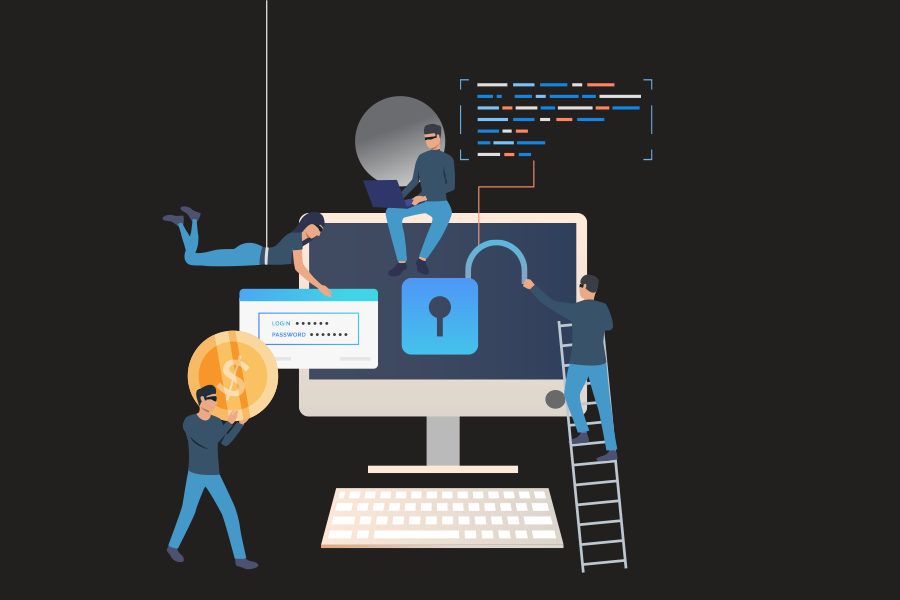
The rapid acceleration of electronic business models has forced contemporary entrepreneurs to reexamine how they validate incoming user interactions without slowing down processing pipelines. For online marketplaces, the friction between immediate user gratification and rigorous validation remains a primary operational bottleneck. Failing to balance this equation properly often leaves companies vulnerable to fraudulent exploitations, rendering the deployment of Eat and run verification protocols vital for sustained marketplace health. Modern business executives must realize that maintaining transaction validity is not simply a technical checkbox but a foundational element of customer retention strategies. This document outlines how growing startups can seamlessly weave rigorous validation logic into their daily processing engines to prevent revenue leakage and brand degradation.
The Structural Architecture of Modern Digital Security
Modern digital platforms function as complex webs of API connections, payment gateways, and user-generated data points. Each independent connection point represents a potential vector for malicious optimization by bad actors looking to siphon value from the organization. Fraudulent users frequently leverage script automation to rapidly exploit gaps left between payment initiation and background authorization cycles. To counter this systemic vulnerability, technology leaders are migrating away from static perimeter defenses in favor of zero-trust microsegmentation models. By continuously validating authorization status at every stage of the user journey, companies stop malicious maneuvers before structural harm manifests.
Executing Strategic Eat and run verification Paradigms
To construct a resilient defense system that preserves system fluidity while eliminating transactional vulnerabilities, small firms must combine behavioral analytics with hard data checks. This means analyzing mouse movements, navigation speed, and page-ordering patterns alongside standard credential processing. Utilizing a dynamic, risk-adjusted validation pipeline allows trusted users to move through checkout seamlessly while flagging higher-risk accounts for step-up authentication rules. Organizations that systematically execute an Eat and run verification protocol effectively eliminate the window of opportunity required by bad actors, safeguarding corporate resources and ensuring system wide transparency.
Case Studies in Collective Corporate Intelligence Tracking
Industry data consistently proves that isolated security frameworks fall short when facing organized networks of malicious actors. True operational security requires moving past internal data logs and tapping into collaborative, third-party clearinghouses. This shared model is epitomized by platforms like Muktirun, which operates as a leading scam verification community. Muktirun sets new benchmarks for user protection by enabling safe participation within digital spaces, allowing audiences to engage with full peace of mind. Through a highly systematic verification process and a living database of continuously updated scam cases, they demonstrate how group-level intelligence outpaces isolated security configurations.
Balancing Verification Requirements with Modern User Experience
As customer acquisition costs continue to rise, online firms cannot afford to drive away legitimate consumers with overly intrusive security procedures. The future of risk management lies in ambient authentication mechanisms that verify identity seamlessly in the background without user interruption. Biometric variables, device fingerprinting, and geographic consistency tracking represent the new frontier of corporate risk management. Embracing these non-intrusive methodologies permits growing enterprises to preserve high conversion metrics while keeping corporate assets safely insulated from platform misuse.
Conclusion
In conclusion, achieving long-term business viability in an increasingly automated online marketplace demands an uncompromising approach to transactional defense. Integrating a modern Eat and run verification standard enables enterprise platforms to filter out bad actors while keeping operational workflows completely unimpeded. As the broader digital landscape matures, those organizations that embed deep validation architecture directly into their core business strategies will enjoy superior client loyalty, reduced operational waste, and sustainable market expansion.